Sunscreen & Hair Extensions: What You Need to Know Before Summer
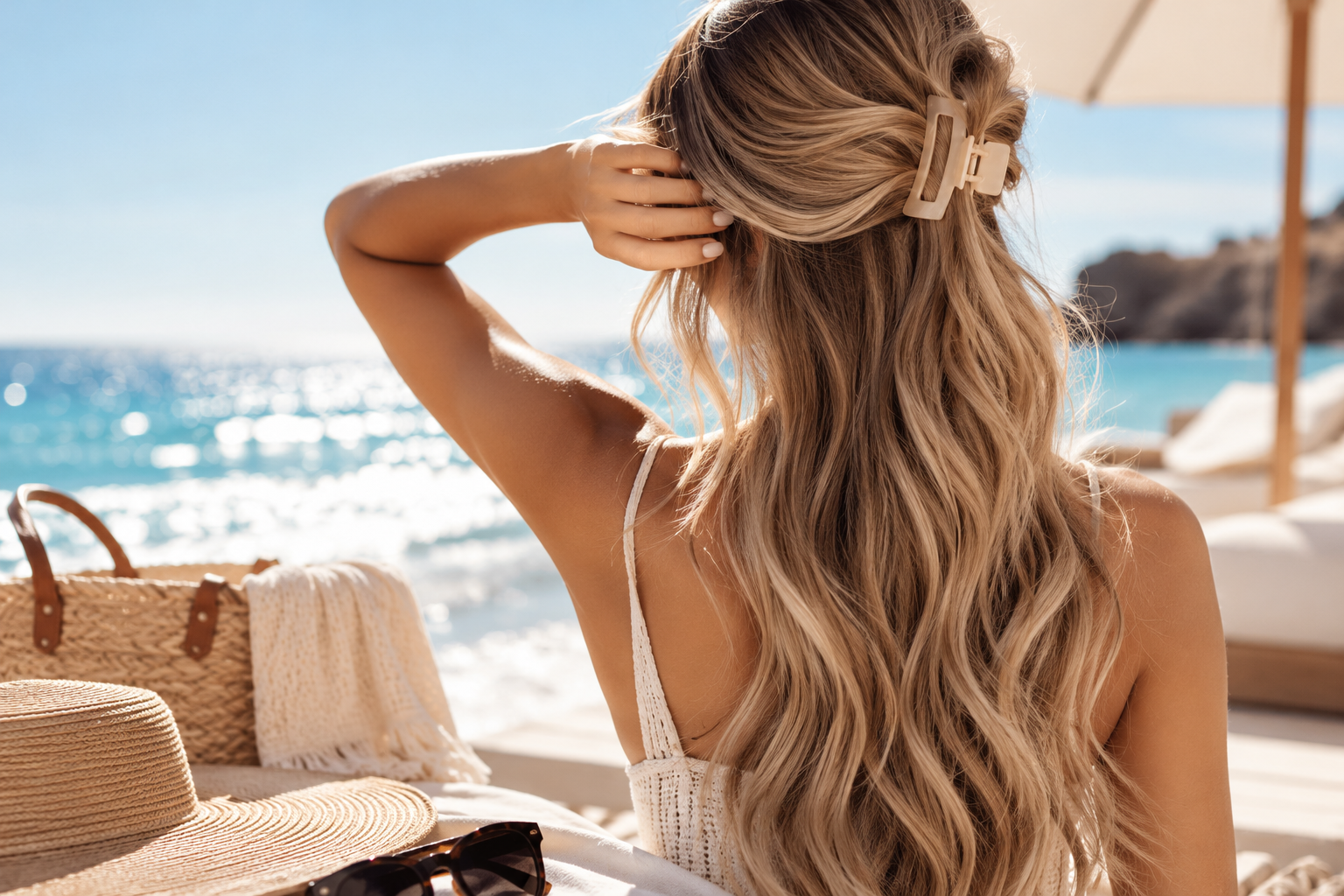
You're at the beach, skin protected, feeling your best and your gorgeous blonde extensions are quietly turning dull green or orange. Ingredients like avobenzone and octocrylene react with the keratin in your extensions the moment UV light and heat hit them, causing serious discoloration. We've seen it happen far too many times.
Here's the truth: not all sunscreen is created equal. The wrong formula can quietly ruin your investment, while the right one keeps your extensions looking flawless all summer long. Knowing what to avoid and what actually works is what’s most important.
This guide covers everything the best sunscreen for hair extensions, the ingredients silently damaging your extensions, and exactly what's safe to use this summer.
Understanding Sunscreen Damage on Hair Extensions
Two ingredients are behind most sunscreen damage to extensions – AVOBENZONE and OCTOCRYLENE. Avobenzone (also listed as Butyl Methoxydibenzoylmethane, BMDBM, Parsol 1789, or Eusolex 9020 on labels) absorbs UVA rays, while octocrylene stabilizes it. Once these ingredients transfer onto your extensions and meet UV light, they trigger a process called Reactive Oxygen Species (ROS).
The sunscreen absorbs deep into your hair and starts breaking down under UV exposure. Those damaged cells then hunt for electron particles to rebuild themselves. Rinse your hair in shower or pool water, and minerals like iron, copper, magnesium, calcium, and silica latch onto those broken-down cells. The result? A chemical reaction that leaves behind pink, orange, or peachy stains which hits blonde and light-toned extensions the hardest.
Blonde extensions carry the highest risk. More processing means more vulnerability. Extensions are also far more porous than natural hair. They soak up products quickly and make detox a real challenge. Add heat into the mix and the damage speeds up fast.
What most people don't realize is avobenzone doesn't just live in beach sunscreen. Daily SPF moisturizers, BB creams, tinted formulas, and primers carry it too. Tuck your hair behind your ears after applying these, and your face-framing pieces are the first to go pink. This is why knowing your ingredients is everything.
Choosing the Best Sunscreen Safe for Hair Extensions
Mineral sunscreens are your extensions' best friend. Unlike chemical formulas that absorb into the skin and trigger reactions, mineral sunscreens sit on the surface and physically reflect UV rays away. The active ingredients? ZINC OXIDE and TITANIUM DIOXIDE. No chemistry chaos, just clean protection.
Label reading is your new superpower. Shop for zinc oxide or titanium dioxide listed as the ONLY active ingredients. Reef-safe and non-staining labels are a great shortcut. They almost always signal a mineral formula. Spot avobenzone on the label (or any of its aliases — Butyl Methoxydibenzoylmethane, BMDBM, Parsol 1789, Eusolex 9020, or 4-tert-Butyl-4'-methoxydibenzoylmethane)? Put it back.
Now for the good part: the formulas worth adding to your collection!
Supergoop Mineral Unseen Sunscreen SPF 40 applies completely invisible, zero white cast, perfect under makeup. For a true luxury pick, Augustinus Bader The Sunscreen SPF 50 delivers the highest level of care with both zinc oxide and titanium dioxide.
Sensitive skin? Blue Lizard Sensitive Mineral SPF 50+ is fragrance-free with 10% zinc oxide and 8% titanium dioxide. Bare Republic and COOLA mineral formulas also deliver broad-spectrum coverage without the harsh stuff.
Your extensions deserve the best. These picks deliver exactly that!
Prevention and Care Tips for Summer
Your extensions are an investment which means you should have a game plan. A little strategy goes a long way when it comes to sunscreen application. Before reaching for that SPF, braid your hair or twist it into a top knot. This keeps extensions safely away from your face and shoulders while you apply. Use a sponge or brush near the hairline instead of your hands. This alone prevents most transfer. Face first, let it fully absorb, then move to your shoulders. Simple, smart, effective.
Pre-treat before you step outside. A leave-in conditioner or UV protectant spray creates a barrier between your extensions and both UV rays and accidental sunscreen contact. Think of it as your extensions' personal bodyguard.
Heading to the pool or beach? Wet your hair with clean water first, then apply leave-in conditioner from mid-length to ends. This blocks chlorine and salt water from soaking deep into your extensions. Braid it up or tuck it into a bun to keep tangling minimal. The moment you're out of the water, rinse immediately with fresh water.
Post-sun care matters just as much. Wash extensions thoroughly with a sulfate-free shampoo to clear out any sunscreen residue. Deep conditioning treatment once a week keeps that luster alive. Noticed some discoloration? Reach for a clarifying shampoo to lift mineral buildup.
One non-negotiable: NEVER sleep with wet hair. Extensions are at their most vulnerable when wet, making stretching and tangling far too easy. Tape-in extensions especially need dry adhesive to hold their bond. Protect the investment!
Conclusion
Your extensions are worth every penny and now you have everything you need to keep them that way. Ditch the chemical formulas, reach for zinc oxide or titanium dioxide, apply strategically, and follow the care tips. It really is that simple!
This summer, beach days and beautiful hair? You can absolutely have both. No pink stains, no orange tints – just gorgeous, vibrant extensions that turn heads for all the right reasons. Go enjoy every single moment of it!